
What Father's Day Often Means, But Doesn't Always Get Said

Lianne Perry, MA, MSc., RCC

Father’s Day has a way of bringing certain things into focus, even if they don’t always get spoken out loud.
For some, it’s a day of appreciation and connection. For others, it’s quieter than that. More reflective. Sometimes even a bit complicated. But regardless of the experience, there are often layers to what this day represents that don’t always make it into the cards, the posts, or the conversations.
A lot of what Father’s Day holds tends to sit just beneath the surface.
The quieter ways fathers show up
Not all care looks the same, and not all fathers express themselves in ways that are easy to recognize.
For many people, the way their father showed up wasn’t through long conversations or emotional openness. It might have looked more like consistency, providing, fixing things, being there in practical ways, or doing what needed to be done without much said about it.
Those forms of care can be easy to overlook, especially if they didn’t come with the kind of emotional expression you may have needed at the time. But for some fathers, that was the language they had.
That doesn’t mean it always landed. But it does mean there was often something there, even if it was harder to feel.
The gap between intention and impact
This is a place where a lot of people get stuck.
It’s possible to recognize that someone was trying in the ways they knew how, and at the same time feel the impact of what was missing. Those two things can exist together.
You might be able to see effort, responsibility, or presence, and still feel a lack of emotional connection, understanding, or closeness. Holding both of those truths can be uncomfortable, but it’s often where a more honest understanding begins.
It allows space for nuance, rather than forcing the experience into something that feels too simple.
What doesn’t always get said
Father’s Day can bring up appreciation that feels hard to express. It can also bring up things that were never fully resolved, conversations that didn’t happen, or moments that didn’t land the way they needed to.
Sometimes it brings up a wish that things had felt different.
Sometimes it brings up gratitude that was never really spoken.
And sometimes, it brings up both at the same time.
There isn’t one “right” way to feel on a day like this, even though it can sometimes look like there is.
Making space for your own experience
It can be easy to get pulled into what you think you should feel or say, especially on days that carry cultural expectations.
But Father’s Day doesn’t have to be about getting it right. It can be about noticing what’s true for you.
That might look like reaching out. It might look like reflecting quietly. It might look like appreciating something small that you hadn’t named before. Or it might look like acknowledging that your experience doesn’t fit neatly into a celebration.
Whatever shows up, there is room for it.
Closing thoughts
What Father’s Day often holds isn’t just about the relationship itself. It’s about how that relationship was experienced, what was present, what was missing, and what it meant to you over time.
Taking a moment to notice that, without needing to simplify it, can be a meaningful way to move through the day.
Joey’s Take 🐾
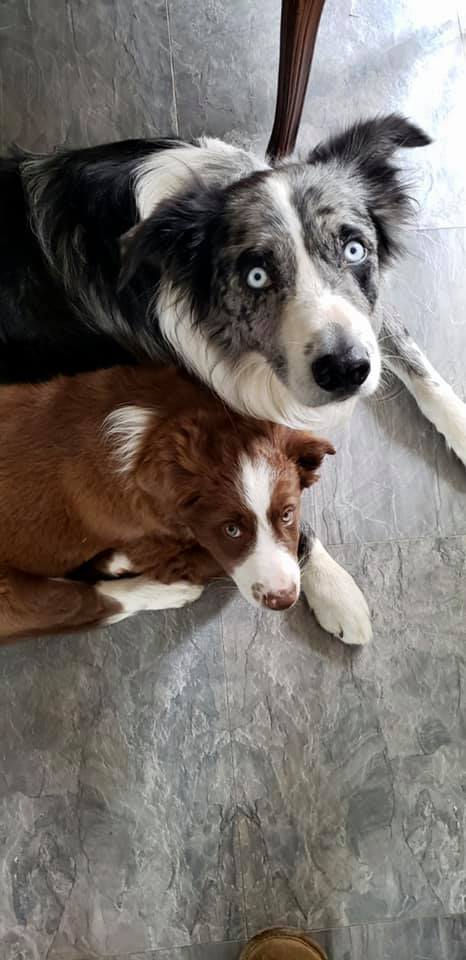
I didn’t always know what I was doing.
But I had my dad right there showing me the way.
About Lianne
I’m Lianne Perry, a Registered Clinical Counsellor in BC who works online with clients across Canada. I specialize in trauma, anxiety, and life transitions, and I’m certified in EMDR, a powerful approach that helps people heal without having to relive every detail of the past. My sessions are grounded, collaborative, and often a mix of talk therapy and practical tools. When I’m not in session, you’ll probably find me hiking with my Aussie, Joey, or sitting by the ocean, my favourite co-therapist.


