
Why You Keep Missing Each Other’s Signals (and How to Start Catching Them)
- LPerry

- Feb 17
- 4 min read
Lianne Perry, MA, MSc., RCC

Many couples come to therapy frustrated, not because they don’t care, but because they feel like they are constantly misreading each other.
One partner says they are overwhelmed. The other hears criticism. One partner pulls back to self regulate. The other feels rejected. Both walk away feeling unseen and confused about how things escalated so quickly.
What often gets missed in these moments is that most couples are not arguing about the content of the conversation. They are missing each other’s signals.
What couples’ signals actually are
Signals are the subtle ways we ask for connection, reassurance, or support.
They are rarely delivered clearly. A sigh. A change in tone. A short reply. A bid for help that comes out sideways. A withdrawal that is actually a request for space, not distance.
According to Gottman research, relationships are built on how partners respond to these small bids for connection. Over time, consistently turning toward each other builds trust and emotional safety. Missing those bids repeatedly can slowly erode it, even when love is still very much present.
Most couples are sending signals all day long. The challenge is recognizing them in the moment.
Why misreading happens so easily
When emotions rise, your nervous system takes over.
Instead of listening with curiosity, your body scans for threat. You move into protection mode. You defend, explain, shut down, or escalate. At that point, you are no longer responding to your partner’s signal. You are responding to your interpretation of it.
This is especially common in couples where one partner tends to pursue connection while the other tends to withdraw to cope. Each strategy makes sense on its own. Together, they often collide.
The pursuer experiences distance as danger and tries harder.The withdrawer experiences intensity as danger and pulls back.
Both are trying to feel safe. Neither is wrong. But without understanding the pattern, each partner ends up feeling blamed or misunderstood.
The signal beneath the reaction
In couples therapy, we often slow moments down and ask a simple question.
“What was the need right there?”
Under frustration there is often a desire for closeness or reassurance. Under withdrawal there is often a need for calm or emotional safety. Under criticism there is often a request to feel important or considered.
When couples learn to look beneath the reaction, the entire interaction begins to shift. You stop debating who is right and start understanding what each person is asking for.
That understanding alone can soften tension.
Why fixing communication alone is not enough
Many couples try to solve these patterns by learning better communication skills.
While tools matter, they often fall short if the nervous system is still activated. You can know the right words and still miss the moment if your body feels threatened or overwhelmed.
This is why couples work is not just about technique. It is about regulation.
When partners feel calmer, they become more receptive. When they feel safer, they become more curious. And when curiosity returns, signals become much easier to notice and respond to.
Without regulation, even the best communication tools can feel forced or ineffective.
How couples therapy helps here
In couples therapy, we focus on helping partners recognize each other’s patterns without blaming or pathologizing them.
We identify triggers and protective strategies. We practice slowing interactions down. We work on repairing missteps more quickly instead of letting them snowball.
Using Gottman based approaches, couples learn how to:
recognize and respond to bids for connection
soften start ups during difficult conversations
repair after conflict rather than avoiding it
build rituals of connection that strengthen trust over time
The goal is not to eliminate conflict. It is to create a relationship where conflict does not threaten the sense of connection.
What starts to change over time
As couples get better at catching each other’s signals, arguments begin to feel less personal. Conflict becomes more manageable. Moments of connection happen more often, even in the middle of stress.
Partners often say they feel more like a team again.
They still disagree. They still have hard days. But they no longer feel like they are constantly missing each other or fighting for emotional ground.
Responsiveness replaces reactivity. Repair replaces resentment.
That is where lasting change happens.
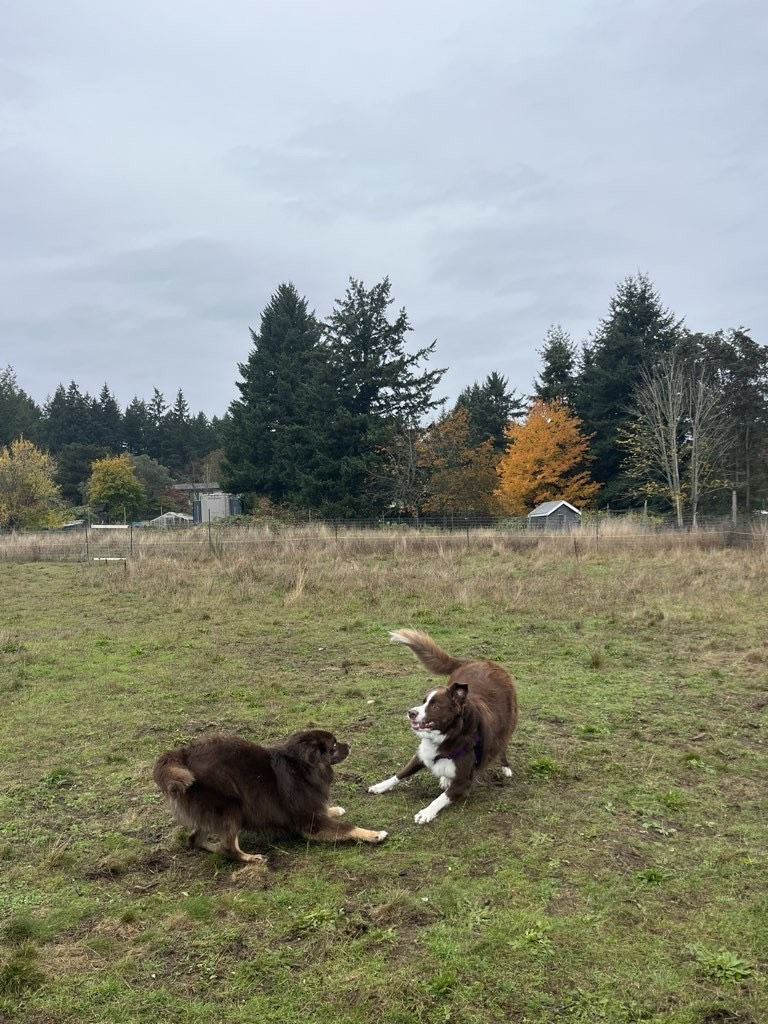
Joey’s Take 🐾🐾
When one of us drops into a play bow, we’re saying something very specific.I’m not here to fight.I’m not here to take over.I’m here to connect.
It’s an invitation, not a demand.
When the other dog mirrors it back, that’s the good stuff. It means, I see you. I understand what you’re asking. I’m in.
That’s how trust gets built between us.Not by guessing intentions, but by making them clear and responding in kind.
And yes, sometimes the play bow is followed by wild zoomies, questionable footwork, and absolutely no memory of personal space.
Still counts as connection.
About Lianne
I’m Lianne Perry, a Registered Clinical Counsellor in BC who works online with couples across Canada. I’ve completed Level 3 Practicum training in Gottman Method Couples Therapy and help couples strengthen communication, manage conflict, and feel more connected. My approach is practical, collaborative, and focused on giving you tools you can actually use outside of therapy. When I’m not in session, you’ll usually find me hiking with my Aussie, Joey, or sitting by the ocean, my favourite co therapist.


